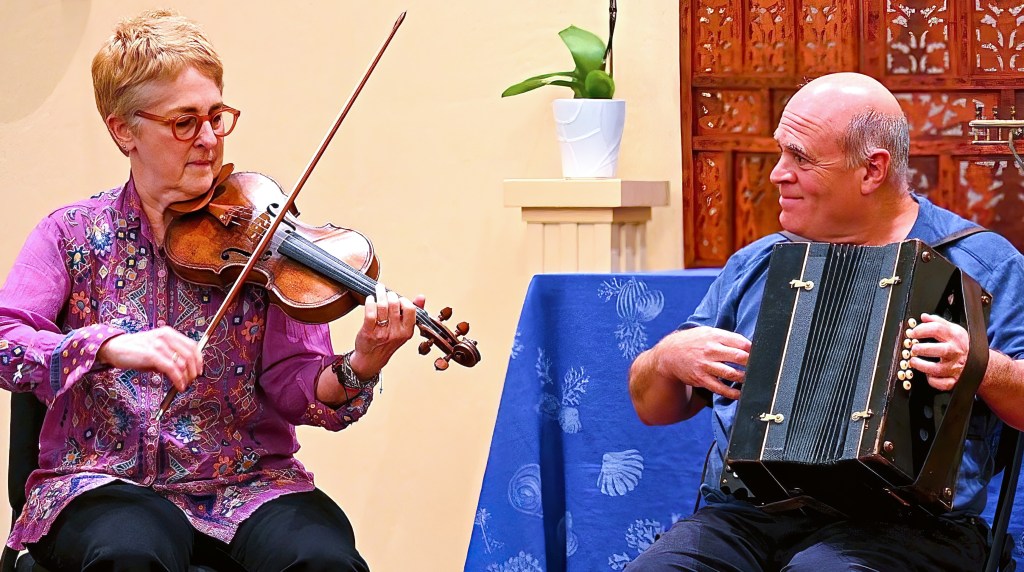
Cookie Segelstein (violin)
Joshua Horowitz (chromatic button accordion)
Cookie Segelstein and Joshua Horowitz are founding members of the trio Veretski Pass, founded in 2002 by Cookie Segelstein, which takes its name from the mountain pass in the Carpathians through which the emigrating Jews settled in Transcarpathia, first reaching the town of Mukachevo, or Munkacs. It was also the initial point of entry of the Magyar tribes into Europe in 896 A.D. led by Prince Árpád. Cookie’s father was born in Nizhniye Veretski at the base of this pass, her mother in Munkacs (Mukacevo), and much of the music they play comes from this region.
With traditional instruments of this area, violin and bayan (button accordion), this veteran duo plays a mix of Jewish instrumental music of pre-WWII Eastern Europe, or klezmer music, along with traditional melodies from Ukraine, Carpathian-Ruthenia, Bessarabia, Poland and Rumania. In a true collage of Carpathian, Jewish, Rumanian and Ottoman styles, typical suites contain dances from Moldavia and Bessarabia, Jewish melodies from Poland and Rumania, Hutzul wedding music from Carpathian-Ruthenia, and haunting Rebetic aires from Smyrna, seamlessly integrated into original compositions. Much of this rare music has been gleaned from field recordings gathered by the musicians in numerous trips throughout Europe, as well as from family members.
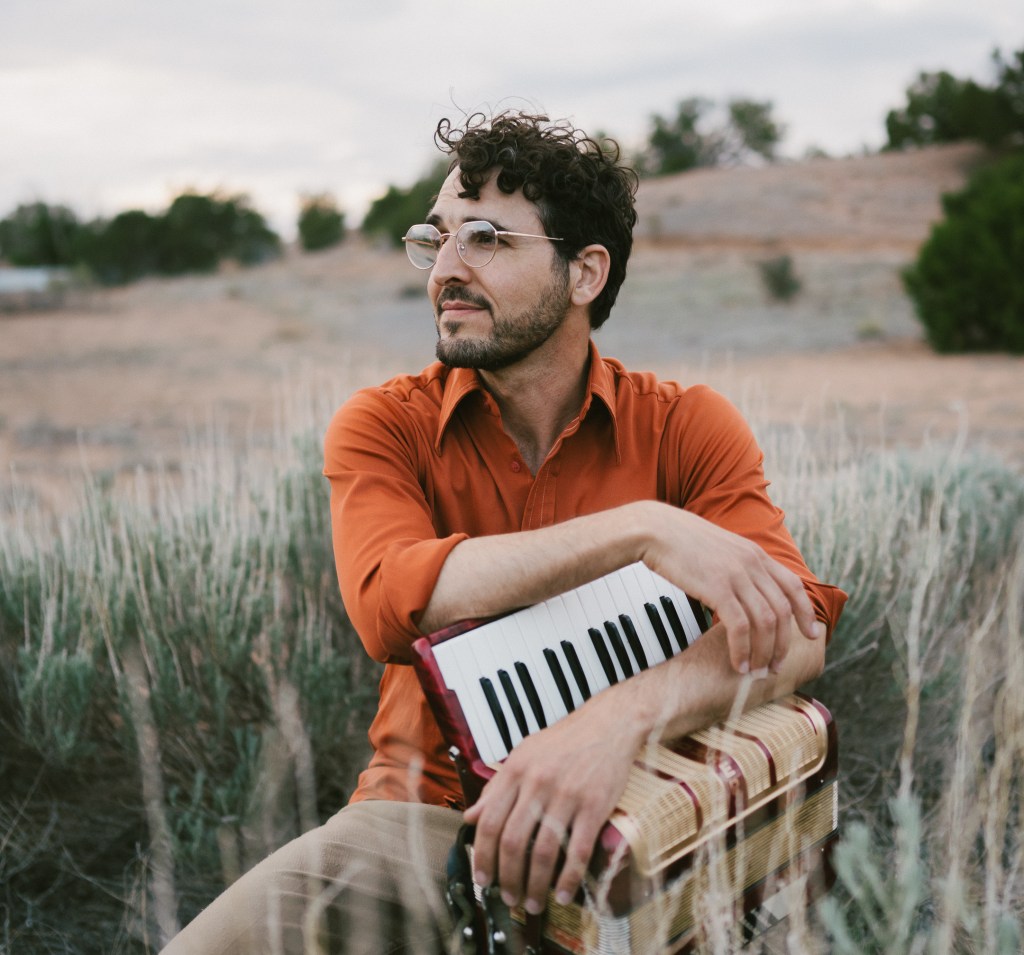
Jordan Wax is a multi-instrumentalist, singer, and composer based in New Mexico. For the past twenty five years he has studied intergenerational music traditions with elders from a variety of cultural lineages in the Ozarks, Mexico, Ecuador, New Mexico, and throughout Yiddishland, and directed collaborative ensembles in the context of Ashkenazi, Ozark, and Indo-Hispanic cultural revitalizations. He began his formal study of Yiddish with Peysakh Fiszman in 2000, and since has worked with Perl Teitelbaum and informally with elders who have shared with him the warmth and complexity of Yiddish’s musical and spoken dialects. In addition to ongoing projects with poly-ethnic traditions in New Mexico, his current work centers his songwriting in Yiddish. His debut album, טײַטש | The Heart Deciphers was released in January 2025 by Borscht Beat, and was followed by פּאַנטאַקאָזאַק | Pantakozak, a collection of original Yiddish/English songs for children and families.
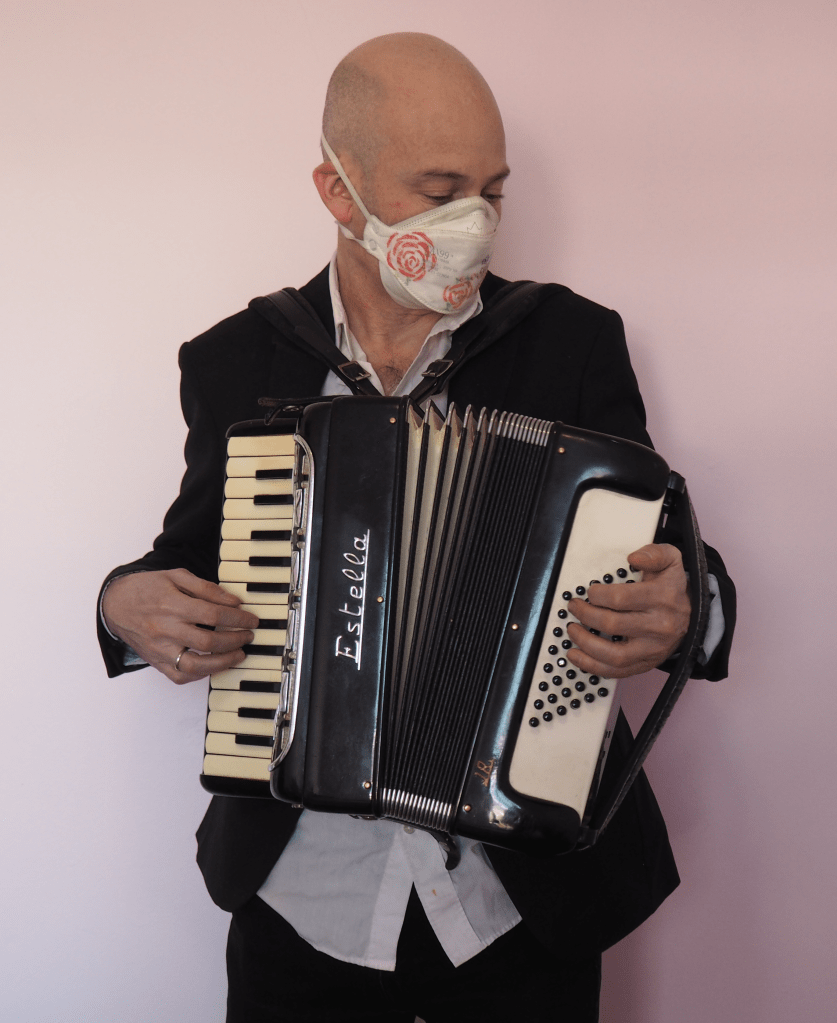
COAX Records artist Geoff Berner (pronouns: He/him) is a Jewish singer/songwriter/accordion player/novelist/political activist living in Vancouver on the unceded lands of the Musqueum, Squamish and Tsleil-Watouth peoples.
Over the last 25 years, he’s garnered a sizable, enthusiastic international cult following, having toured in 17 countries and played live on national radio in 7 of them. He’s opened for rock stars in stadiums, led 1000s in rude sing-a-longs from festival mainstages, and played nearly every dirty little cafe bar in Western Europe. He’s toured Scandinavia, extensively and often.
He’s spent much of his career playing klezmer music, the folk music of Eastern European Jews, but he also plays and writes folk songs in English, often of a lefty, satirical political nature. Those songs have been covered by a long of other artists, including: The Be Good Tanyas (“Light Enough to Travel”), Corb Lund (“That’s What Keeps the Rent Down, Baby”) Kaizers Orchestra (“Whiskey Rabbi”), Rae Spoon (“Unlistenable Song”) and Ben Caplan (“Traveller’s Curse).
His latest album, “7 Plague Songs” is his Covid Folk Songs album. During this ongoing, definitely-not-over pandemic, Berner has chosen to stay off the road and out of the bars. “I refuse to be a Pied Piper of mass infection,” he says. With the release of the new album, he’s beginning to play outdoor shows with strict Covid safety protocols, to ensure safety and accessibility for everyone.
“7 Plague Songs” is intended to perform the traditional role of satire: afflicting those who are comfortable with the avalanche of death and disability that Covid is bringing, and comforting those afflicted by Long Covid, mourning the loss of loved ones who died because of governments’ scandalous neglect of public health, or coping with the gaslighting of a dominant political culture determined to deal with overlapping crises by simply pretending they are over. “My message to you, if you know the pandemic isn’t over, is: ‘You are not alone.’”
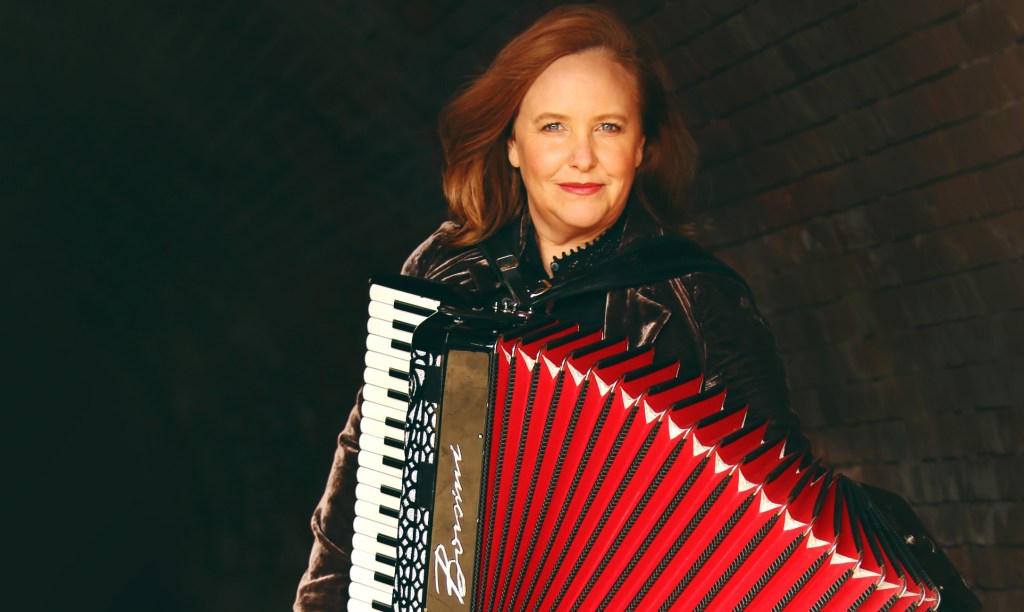
Christina Crowder has been performing and researching Jewish music for thirty years, beginning in Budapest, Hungary in 1993 as a founding member of Di Naye Kapelye, and continuing with a Fulbright grant to Romania to document Jewish music in 1999, and since 2002 with an active research, teaching, and performing career in the US. She is Executive Director of the Klezmer Institute, which has been awarded three National Endowment for the Humanities Grants for Institute projects (2021-2025). Christina lives in New Haven, Connecticut, and performs with the Zamlers Trio. She also performs with Michael Winograd and the Honorable Mentschen, the Dave Levitt Klezmer Trio and many others. She has been a guest instructor in klezmer accordion and ensemble performance in the US, Canada, and Europe, and was both musical director and performer in the 2019 Oregon Shakespeare Festival and the 2020 ART Portland productions of the Broadway play “Indecent.” With the Klezmer Institute, Christina edited the Levitt Legacy music folio, is curating a player folio of Kiselgof-Makonovetsky Digital Manuscript Project music, and has led KMDMP artist residency programs in Arizona, Connecticut, Minnesota, Oregon, New Mexico, Washington, France, and Belgium.
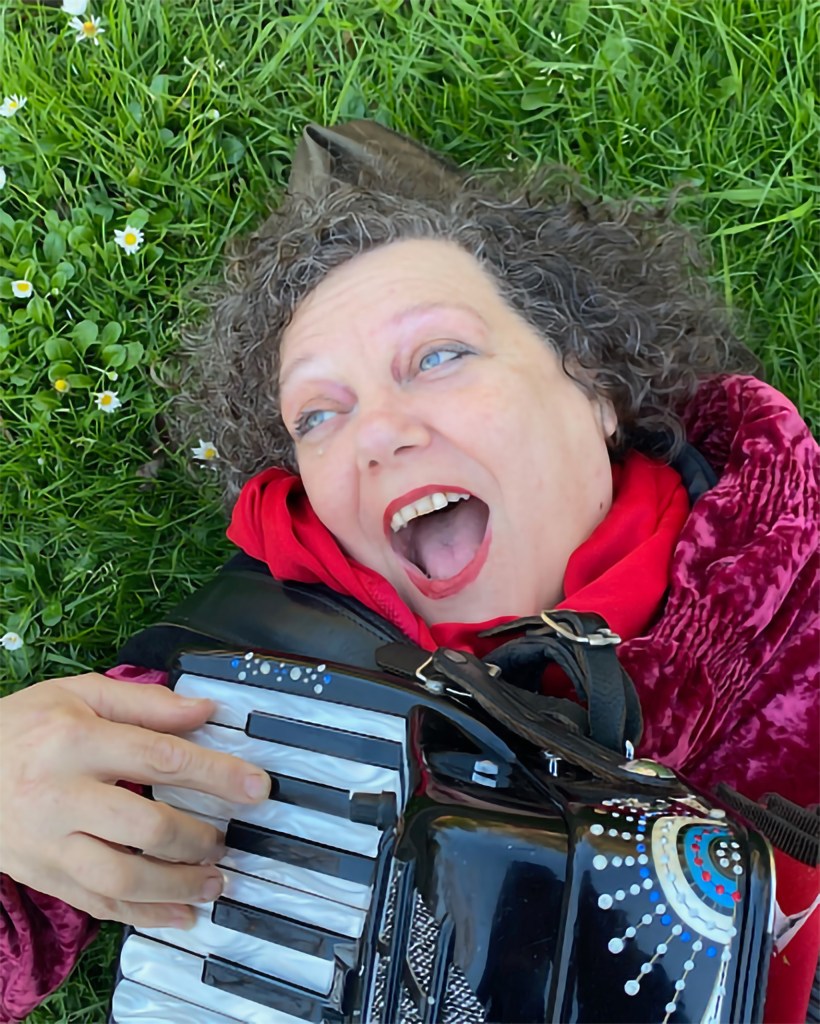
Jeanette Lewicki, who lives in San Francisco, is a long-time singer of Yiddish songs as well as an accordionist, artist, writer, and klezmer musician. She leads her own band “the gonifs” and she loves to teach. Jeanette first picked up the accordion in the vegan commune where she started living at the age of 28.
During the pandemic, she began the Pepi Litman Project to translate the satirical songs of that charismatic turn-of-the-century cross-dresser from Yiddish into English.
Jeanette feels lucky to learn from and work with dedicated Yiddishists including Arkady Gendler, Gerry Tenney, Beyle Schaechter-Gottesman, Itzik Gottesman, Eliezer Niborski, and Miriam Trinh.
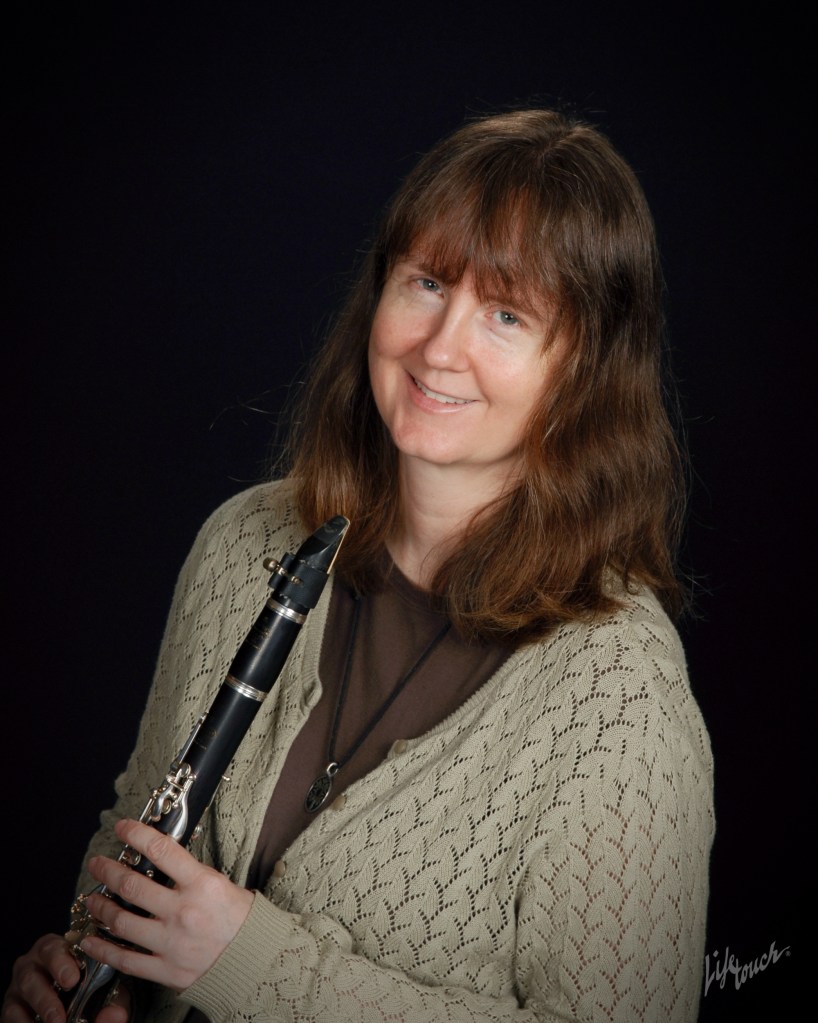
Marianne Tatom (she/her) teaches online Yiddish classes through the Workers Circle, Congregation Beth Shalom (Seattle), and the Northern California Workers Circle. She has received the Certificate of Yiddish Pedagogy from the Yiddish Book Center, the culmination of an intensive period of Yiddish pedagogical study. Marianne has a PhD in music theory and is a freelance editor and clarinetist (klezmer and other folk music). She was inspired to learn Yiddish by a beloved aunt and has studied Yiddish at YIVO and the Workers Circle. Marianne lives in Seattle with her miniature long-haired dachshund, Mendel, who frequently appears in her classes.
 KLEZCADIA